
Waterjet or Fiber Laser Cutting?: An Unbiased, Detailed Guide
Waterjet vs Fiber Laser: The Comparison No One Tells You Honestly
A fabricator from Pune called us last week asking a question we hear almost daily: "Should I buy a waterjet or a fiber laser cutting machine?"
Our answer surprised him: "What are you cutting, and why?"
After 25 years as a laser cutting machine manufacturer, we've learned that the "best" cutting technology isn't about which machine costs more or cuts faster. It's about matching technology to your specific materials, applications, and business requirements.
Let me share what we tell every customer who asks this question — the honest comparison that considers real-world manufacturing needs, not just technical specifications.
Why This Comparison Matters More Than Ever
Indian manufacturing is evolving rapidly. Job shops that once handled simple mild steel fabrication now receive orders for aluminum aerospace components, stainless steel food equipment, and titanium medical devices. Your cutting technology needs to match this diversity.
Both waterjet cutting systems and fiber laser cutting machines have legitimate places in modern manufacturing. Understanding where each technology excels — and where it struggles — helps you make investment decisions that serve your business for years to come.
Understanding the Fundamental Differences
Before comparing performance, let's understand how these technologies actually work, because the cutting mechanism determines everything else.
How Fiber Laser Cutting Works
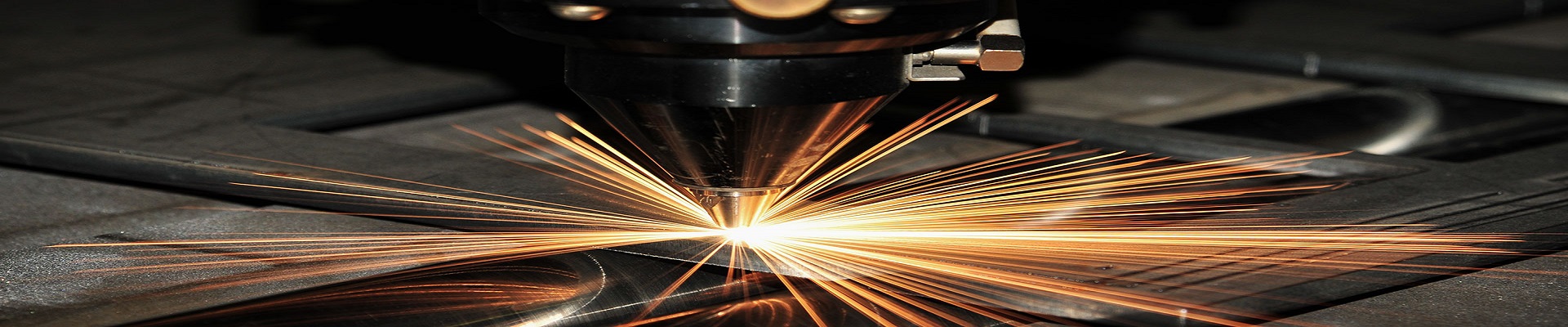
A fiber laser cutting machine generates an intense beam of light through fiber optic technology. This focused energy melts or vaporizes material along the cut path while assist gas blows away molten material. The process is fast, precise, and incredibly efficient for most metals.
Modern CNC fiber laser cutting machines combine this cutting capability with computer numerical control for automated operation. Program your part, load your material, and let the machine handle complex cutting sequences with minimal operator intervention.
How Waterjet Cutting Works
Waterjet systems force water through a tiny nozzle at extremely high pressure (typically 50,000-90,000 PSI). For harder materials, abrasive particles are added to the water stream. This high-velocity stream physically erodes material away rather than melting it.
The waterjet process works on virtually any material — metals, plastics, composites, stone, glass, even food products. This versatility is waterjet's greatest strength.
Material Compatibility: Where Each Technology Shines
Metals: The Fiber Laser Advantage
For metal cutting applications — which represent the majority of Indian manufacturing — fiber laser cutting machines deliver superior performance on most common materials.
Steel and Stainless Steel: Fiber lasers cut these materials faster, cleaner, and more efficiently than waterjet systems. A quality fiber laser cutter processes 3mm stainless steel at speeds waterjet cannot match while producing edge quality that often eliminates secondary finishing.
Aluminum: Modern fiber laser cutting technology handles aluminum efficiently despite its reflective properties. While waterjet cuts aluminum well, fiber laser typically offers better speed and lower operating costs.
Copper and Brass: These highly reflective materials once challenged laser technology, but advanced fiber laser cutting machines with appropriate power levels now handle them effectively.
Where Waterjet Excels
Thick Materials: When cutting steel beyond 25-30mm thickness, waterjet maintains cutting capability where even high-power fiber lasers struggle. For heavy plate applications, waterjet often makes more sense.
Heat-Sensitive Materials: Since waterjet is a cold cutting process, it works well for materials where heat-affected zones cause problems. Certain plastics, composites, and pre-tempered materials benefit from waterjet's cold cutting.
Non-Metals: Glass, stone, ceramics, rubber — waterjet handles materials that lasers cannot cut at all.
Precision and Edge Quality Comparison
Fiber Laser Precision
Modern CNC laser cutting machines for sheet metal achieve remarkable precision. We're talking about tolerances within ±0.1mm on most materials. The focused beam creates narrow kerf widths (often under 0.3mm), allowing tight nesting and minimal material waste.
Edge quality from fiber laser cutting typically meets or exceeds most manufacturing requirements straight off the machine. Many applications need zero secondary finishing, which significantly impacts total production costs.
Waterjet Precision
Waterjet systems achieve good precision, though typically not matching laser accuracy. Tolerances of ±0.2-0.3mm are common, which suffices for many applications but may fall short for precision work.
The waterjet stream tends to taper slightly, creating a slight angle on cut edges. This "taper effect" becomes more pronounced on thicker materials and may require consideration in critical applications.
Speed and Productivity Analysis
This is where fiber laser cutting machines demonstrate clear advantages for most metal cutting operations.
Cutting Speed Reality
On thin to medium thickness metals (up to 15mm), fiber laser systems cut dramatically faster than waterjet. A CNC fiber laser cutting machine might process 3mm steel at 10-15 meters per minute, while waterjet operates at 1-3 meters per minute on the same material.
This speed difference compounds across production runs. What takes a fiber laser 2 hours might require 8-10 hours with waterjet, directly impacting throughput and delivery capabilities.
Setup and Programming
Both technologies utilise CNC control, making programming relatively straightforward. However, fiber laser cutting typically offers faster setup times. No consumable replacement during runs, no abrasive feeding systems to monitor — just load material and start cutting.
Operating Cost Comparison: The Real Numbers
Purchase price is just the beginning. Operating costs determine long-term profitability, and this is where careful analysis matters.
Fiber Laser Operating Costs
Energy Consumption: Modern fiber laser cutting machines are remarkably efficient. A 6kW system typically consumes 10-15 kW of electricity during operation — significantly less than comparable waterjet systems.
Consumables: Primary consumables include protective lenses, nozzles, and assist gas (oxygen or nitrogen). Costs are predictable and relatively low, especially compared to waterjet abrasive consumption.
Maintenance: Fiber laser cutting machine maintenance primarily involves lens cleaning, gas system checks, and basic mechanical maintenance. Annual maintenance costs typically run ₹40,000-80,000 depending on usage.
Waterjet Operating Costs
Abrasive Consumption: This represents waterjet's largest operating expense. Abrasive garnet costs accumulate quickly, especially in production environments. Heavy users might spend ₹50,000-150,000 monthly on abrasive alone.
Water and Filtration: High-quality water is essential, requiring filtration and treatment systems. Water disposal also involves costs and environmental considerations.
Pump Maintenance: High-pressure pumps require regular maintenance and eventual rebuilding. These costs can be substantial, often ₹100,000-200,000 annually for production systems.
Energy: Waterjet systems consume significant electricity running high-pressure pumps, often exceeding laser energy requirements.
Application-Specific Recommendations
Let us break down which technology makes sense for common manufacturing scenarios:
Job Shops and General Fabrication
For shops handling diverse materials with emphasis on metals, fiber laser cutting machines typically provide better versatility and economics. The speed advantage alone often justifies investment, while lower operating costs improve profitability across all jobs.
As a laser cutting machine manufacturer in India, we see job shops dramatically improve capabilities and competitiveness after implementing fiber laser technology.
Heavy Plate Fabrication
Operations primarily cutting thick steel plates (25mm+) might find waterjet more practical. While slower, waterjet maintains cutting capability across thickness ranges where even powerful fiber laser cutting machines struggle.
Multi-Material Operations
Facilities regularly cutting non-metals alongside metals face more complex decisions. Some operations justify both technologies, using each where it excels. Others prioritize based on volume — if 80% of work is metal, fiber laser cutting typically makes more sense despite occasional waterjet advantages.
Precision Manufacturing
For precision parts requiring tight tolerances and excellent edge quality, CNC laser cutting machines for sheet metal applications deliver superior results. Medical devices, electronics enclosures, and precision mechanical components benefit from laser accuracy.
Quality and Consistency Factors
Heat-Affected Zones
Waterjet's cold cutting process produces no heat-affected zones, which matters for certain applications. Fiber laser cutting machines, while generating heat, control heat input precisely enough that HAZ concerns are minimal for most applications.
Advanced fiber laser cutting systems use parameters optimised for minimal heat input, producing results suitable even for applications with strict HAZ requirements.
Dimensional Consistency
Both technologies can produce consistent results, but CNC fiber laser cutting machines typically demonstrate better long-term dimensional stability. Mechanical wear in waterjet systems can gradually affect accuracy, while laser systems maintain precision longer with proper maintenance.
The Technology Evolution Factor
When investing in cutting equipment, consider not just current capabilities but technology trajectory.
Fiber laser technology continues advancing rapidly. Power levels increase, speeds improve, costs decrease, and capabilities expand. As fiber laser cutting machine manufacturers develop new features, existing systems often benefit through software updates and component upgrades.
Waterjet technology is mature and stable. While incremental improvements occur, revolutionary advances are unlikely. This stability provides predictability but less potential for future capability expansion.
Making the Right Choice for Your Operation
After presenting all this information, what should guide your decision?
Choose Fiber Laser Cutting When:
- Primary materials are metals (steel, stainless, aluminum)
- Thickness ranges typically fall below 25mm
- Production speed directly impacts competitiveness
- Operating cost control is critical for profitability
- Edge quality requirements are demanding
- Floor space is limited (fiber lasers are more compact)
The best laser cutting machine in India for your operation depends on matching these capabilities to your actual requirements.
Choose Waterjet When:
- Material variety includes non-metals regularly
- Thick materials (25mm+) represent significant work volume
- Heat-affected zones absolutely cannot be tolerated
- Pre-hardened materials require cold cutting
- Specialty materials (composites, glass, stone) appear frequently
Consider Both Technologies When:
Large operations with diverse requirements might justify both systems, using each where it excels. This combination provides maximum flexibility while optimizing costs.
The Mansoori Weldarc Perspective
As a laser cutting machine manufacturer with 25+ years of experience, we advise customers to focus on their actual applications rather than theoretical capabilities.
We've seen operations choose waterjet for perceived versatility, then discover 90% of their work is sheet metal better suited to laser cutting. We've also seen shops invest in fiber lasers without considering their occasional thick plate requirements, forcing them to outsource work they should handle in-house.
Our role as a fiber laser cutting machine supplier and manufacturer isn't just selling equipment — it's helping customers make decisions supporting long-term success.
Quality Matters More Than Technology Choice
Whether you choose waterjet or fiber laser cutting machines, equipment quality determines results.
Our manufacturing philosophy emphasizes:
- Heavy-duty construction for long service life
- Quality components from proven suppliers
- Rigorous testing before delivery
- Comprehensive training for your operators
- Local support when you need assistance
As one of the established laser cutting machine manufacturers in India, we understand that equipment reliability matters more than impressive specifications.
The Real-World Integration Consideration
Consider how new cutting technology integrates with existing operations:
Operator Training: CNC fiber laser cutting machines typically require shorter training periods than waterjet systems. Most operators with basic CNC experience adapt quickly to laser operation.
Facility Requirements: Fiber laser systems generally require less facility preparation — no water supply infrastructure, no abrasive storage, simpler ventilation requirements.
Production Flow: Consider material handling, automation potential, and workflow integration. Fiber laser cutting systems often integrate more easily with automated loading/unloading systems.
Environmental and Safety Aspects
Fiber Laser Environmental Impact
Fiber laser cutting machines generate minimal waste beyond cut material. No abrasive disposal, limited water usage, and efficient energy consumption make fiber laser operations environmentally cleaner.
Fume extraction handles cutting smoke and vapors, but systems are straightforward and effective.
Waterjet Environmental Considerations
Abrasive disposal requires proper handling and can involve significant costs. Water usage and treatment represent ongoing environmental considerations. However, waterjet operations produce no fumes or toxic emissions.
Investment Timeline and ROI
Fiber Laser Investment Returns
Most fiber laser cutting machine installations show positive ROI within 18-36 months through:
- Increased production capacity enabling higher revenue
- Lower operating costs improving margins
- Quality improvements reducing rework and scrap
- New capabilities accessing higher-value work
Waterjet ROI Considerations
Waterjet ROI depends heavily on application mix. Operations cutting primarily thick materials or non-metals might see faster returns than those cutting thin sheet metal where laser excels.
Higher operating costs mean waterjet profitability depends more on application selection — choosing jobs where waterjet advantages justify operating expenses.
Future-Proofing Your Investment
Technology investments should serve your business for years. Consider:
Market Trends: Metal fabrication continues growing in India. Infrastructure projects, manufacturing expansion, and "Make in India" initiatives drive metal cutting demand, where fiber laser cutting machines excel.
Capability Expansion: As your business grows, will your cutting technology grow with you? Fiber laser cutting machine manufacturers continue advancing capabilities, providing upgrade paths through software updates and power increases.
Service Availability: Long-term support matters. Local laser cutting machine manufacturers in India provide faster service response and better understanding of local operating conditions than international suppliers.
The Honest Bottom Line
There is no universal "better" choice between waterjet and fiber laser cutting machines. The right answer depends entirely on your specific materials, applications, volume, and business objectives.
For most Indian manufacturers focused on metal cutting applications, CNC fiber laser cutting machines provide superior speed, lower operating costs, excellent quality, and better long-term value.
For operations regularly cutting thick materials, diverse non-metals, or heat-sensitive materials, waterjet systems deliver capabilities lasers cannot match.
The worst decision is choosing based on incomplete information or prioritizing purchase price over total cost of ownership.
Ready to Make an Informed Decision?
At Mansoori Weldarc India Pvt. Ltd., we've helped hundreds of manufacturers evaluate cutting technology options and implement solutions that truly serve their business needs.
As a trusted CNC laser cutting machine manufacturer and supplier, we provide:
- Honest assessment of whether laser cutting fits your applications
- Detailed cost analysis comparing technologies for your specific requirements
- Quality equipment Built for the demanding needs of Indian manufacturing, our machines feature a robust design with a heavy-duty structure.
- Comprehensive training Our engineers provide hands-on training to your team, ensuring they get the best out of every feature.
- Reliable support Every machine comes with a warranty, and our commitment doesn’t end there—we continue to provide complete service and support even after the warranty period.
Contact us today for a consultation that focuses on your success, not just equipment sales. Whether you need a compact system for precision work or high-power capability for heavy production, we'll help you make the decision that serves your business for years to come.
As one of India's leading laser cutting machine manufacturers, we're committed to helping manufacturers make informed technology investments that drive real business results.
Still curious about how fiber laser stacks up against other technologies? Don’t miss these blogs:
▫ Fiber Laser vs Plasma Cutting Machine
▫ Fiber Laser Cutting Machine vs CO₂ Laser
